

#62 w-report GOING "WALD"
Skip the beach and escape to the forest. On a recent journey Gisela learned about Germany's roots, literally and figuratively, from dancing witches to the language of trees.

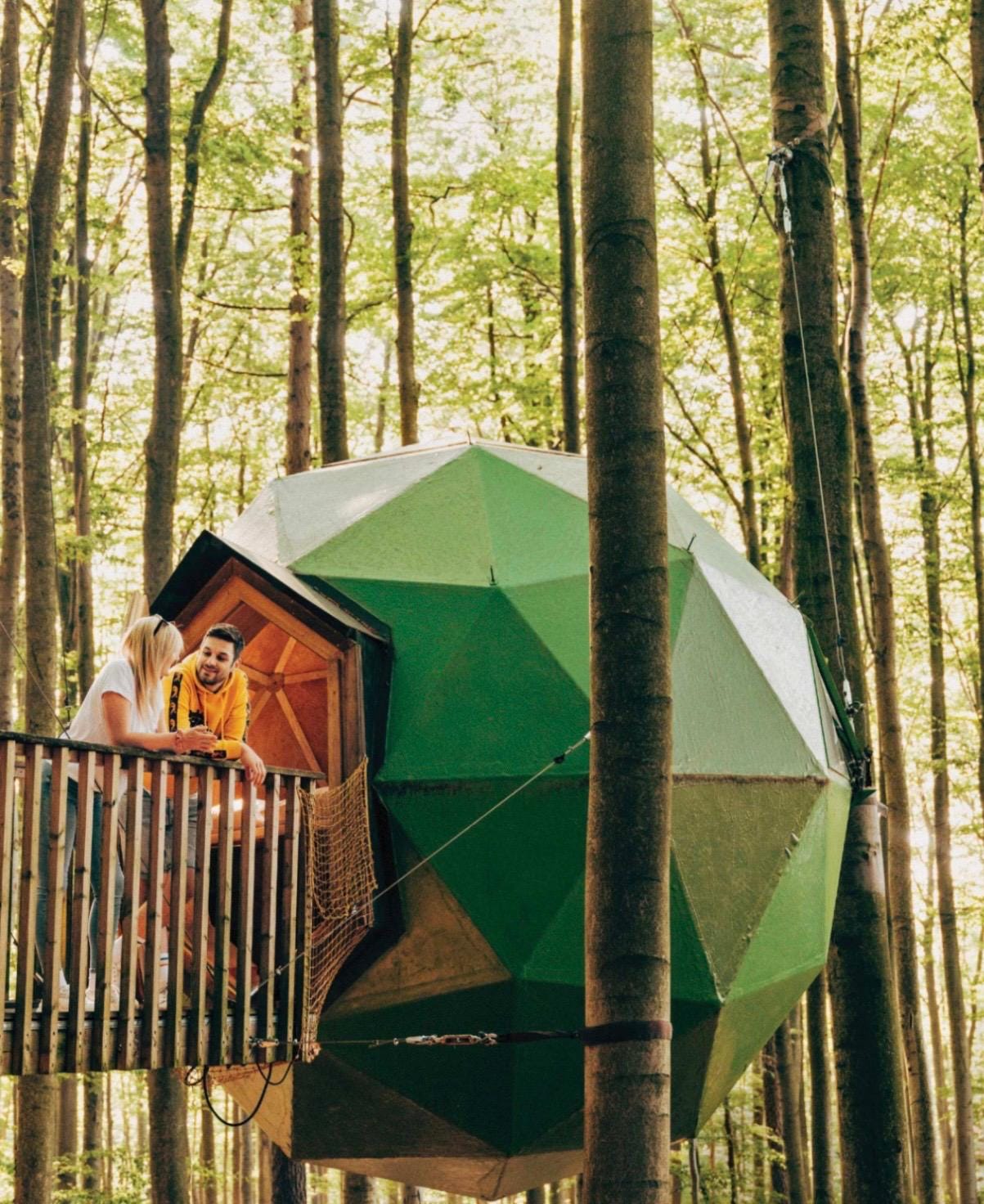
THERE ARE FEW NATIONS that have such a reverential and fierce relationship with the forest as Germany. They are not like the forest bathing Japanese, who passively soak in the silence and contemplate its light and shadows; instead, the Germans wrestle with the forest as if it’s their own spirit or subconscious. From “The Germania”, an account of the Germans by the Roman historian Tacictus published around 98 AD, to Grimm’s fairy tales, for centuries, the “Wald” has been the dramatic stage for German identity as well as its culture, from music to literature.
That seemingly age-old, unbreakable connection between cultural identity and the forest has, for some time, galvanized the country to be at the forefront of forestry and environmental practices. Although one third of the country is forested, and roughly half of Germany’s forest are privately owned, more timber is re-grown than used and much of it is publicly accessible. Having taken hundreds of walks through various well-maintained parks and forests in Germany over the almost two decades I’ve lived here, I’ve always been greatly impressed by this seemingly auspicious relationship between forest and German heritage that I surmised had been sustained, like a great and passionate romance, for centuries.
I had been told that the Black Forest was the birthplace of many of Germany’s fairytales, but reading about Goethe’s adventures, among other things, I soon understood that the Harz Mountains, although unknown to most travelers, was the heart of medieval Germany, and are rich with history and myth. So one summer my husband, our three children, and our dog, Kiko, drove our old Audi about two and a half hours from our home in Berlin to the edge of the Harz, a large rural region in the center of the country, staying with a friend who rents a charming brick house, part of a fortified castle estate, in the quaint town of Hornburg.
At the home of my friend’s neighbor, I stopped in front of an 18th-century print that hangs in the library: an illustrated map of the Harz with a dozen witches flying over the Brocken. Legends of witches and devils have swirled around the mountain for centuries. “Now to the Brocken the witches ride,” the German writer Johann Wolfgang von Goethe wrote in Faust. Rapunzel—and the witch Gothel—are reputed to be from the Brocken town of Wernigrode.
Dieter Runge, an expert in local lore, led us partway along the 62-mile Hexe “Witch” trail, starting in the small city of Thale. We passed through tourist attractions—including a gondola terminal and a small forest adventure park—but soon enough were following a dirt path alongside the narrow, boulder-strewn Bode River. Through gaps in the trees, we would spot two angular peaks, the Hexentanzplatz (“The Witch dance floor)” and the Rosstrappe, above us.
In pre-Christian times, said Runge, the Hexentanzplatz was apparently an important site for secret pagan ceremonies. Legend has it that witches gathered here before their flight to the Brocken on Walpurgisnacht. Today the Harz witches live on in the form of a kitschy folk festival that takes place every spring on the Brocken plateau.
We drove to the foot of the Brocken, where we spent a night at the Torfhaus Harzresort, an upscale alpine retreat made up mostly of cozy individual cabins with wood-burning stoves and freestanding bathubs, located on the edge of the Harz National Park.
On December 10th, 1977, accompanied by a forester, Goethe made an ascent of the snowy Brocken, a mountain in the southwest of the Harz, and, at almost 4,000 feet, the highest in northern Germany. Experiencing this icy, densely forested landscape left him feeling exhilarated and renewed; the experience later inspired Faust, his masterpiece about a scholar who sells his soul to an evil spirit in exchange for unlimited knowledge, power, and pleasure. (Elon Musk anyone?)
On the drive from Thale to the Torfhaus we passed vast open spaces punctuated by the ghostly tree stumps. Later I was told that the Harz’s pine trees were being devastated by a combination of climate change and bark beetles, which finished off the weak trees and cut off all nutrition to their roots.
While we humans were suffering through an epidemic, so were the German forests; more trees died in 2020 than in any other year. (This phenomenon is occurring outside Germany as well: in the Italian region of Puglia, for example, the bacteria Xylella fastidiosa has killed one-third of the olive trees.) At the Torfhaus, however, there was no visible damage to the surrounding landscape, and the property was almost completely booked with German nature lovers.
STAY Torfhaus starts at 180 euros a night
Wild Wood Camping The campground owned by Antje’s old friend Benjamin Ruth—former editor-in-chief of the fantastic but now-defunct *Vice Magazine Germany*—in the Upper Harz region is located at an elevation of about 600 meters, surrounded by forests, hills, and many small mountain lakes. It’s an hour away from Hanover. With a little luck, you might spot lynx, wildcats, or capercaillies in the wild. In addition to tent and campervan sites, there are also charming and very stylish cabins for those who prefer a bit more comfort. Starting at 90 euros per night. If you want to know more, Antje spoke with him for the Salon podcast *Our House*.
EXPLORE Check out the helpful Harz website which includes information about the Witch’s Trail
